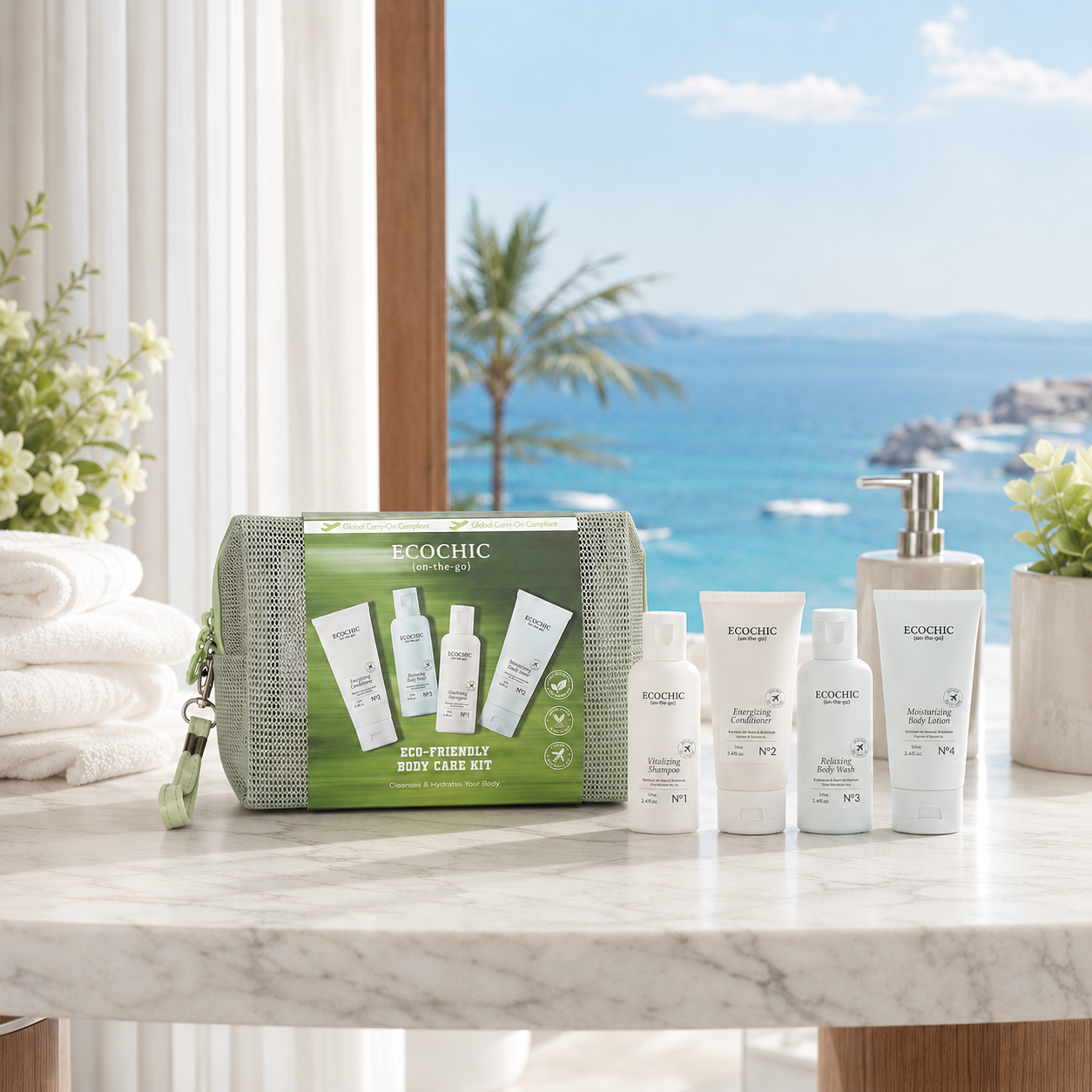
A travel essentials kit handed to a first-class passenger on a 14-hour flight serves a different purpose than one given to a conference attendee. The first step is defining the use scenario and recipient profile. A kit defined around these dimensions is a gift; a kit defined around a budget is a cost.
A business-class amenity travel essentials kit must fit seat-pocket or overhead bin dimensions, contain products compliant with aviation liquid restrictions (sub-100 ml), and survive being opened in a cramped seat at altitude where dexterity is limited. Packaging that requires tearing or two-handed opening fails in this environment. A corporate gift kit for executives emphasizes premium materials — structured cases, leather-look finishes, full-size products — because the unboxing moment directly reflects the gifting company's brand perception. Event swag optimizes for cost-per-unit and logo visibility with contents useful enough to prevent immediate disposal; a swag kit that gets thrown away before the attendee boards the return flight delivers zero brand value. A retail-ready kit requires consumer-grade packaging with barcodes, ingredient listings, and multi-language regulatory labeling — the same compliance burden as any consumer packaged good on a store shelf.
A European airline operating long-haul routes refreshed its business-class travel essentials kit after passenger surveys scored it below competitors. The existing kit contained a generic eye mask, disposable slippers that tore during a single use, and miniature toiletries in non-resealable sachets. The airline worked with Soho International — a manufacturer with over 30 years of kit export experience — to redesign around a structured recycled polyester canvas bag with two-way zip closure. Contents included a contoured memory-foam eye mask, fleece-lined non-slip socks, a bamboo-fiber dental kit, and refillable 30 ml aluminum tubes of facial moisturizer and lip balm. Passenger satisfaction improved from 6.2 to 8.7 out of 10. Per-unit cost increased by approximately €1.40 but was offset by 22% fewer kits left unopened — passengers valued the contents.
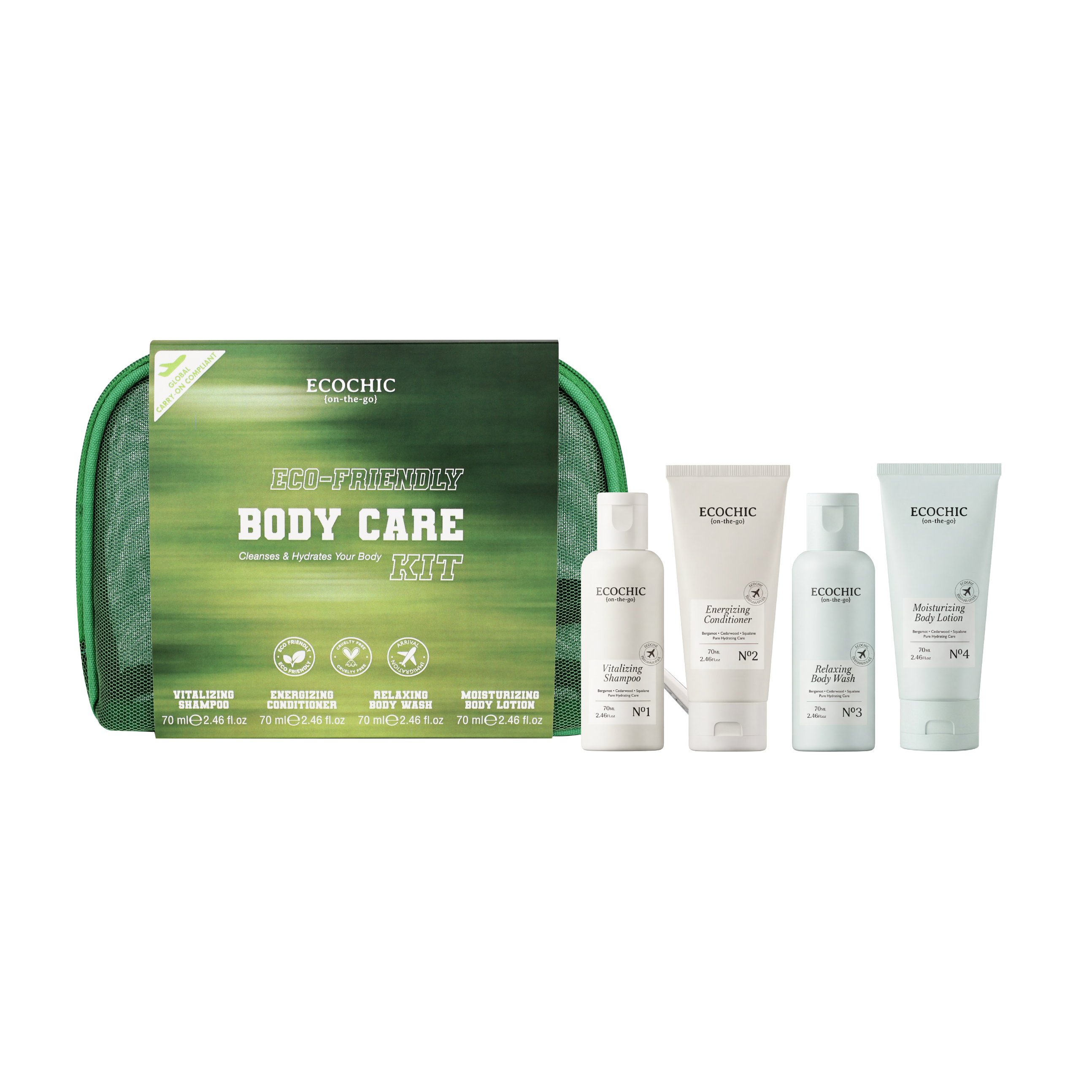
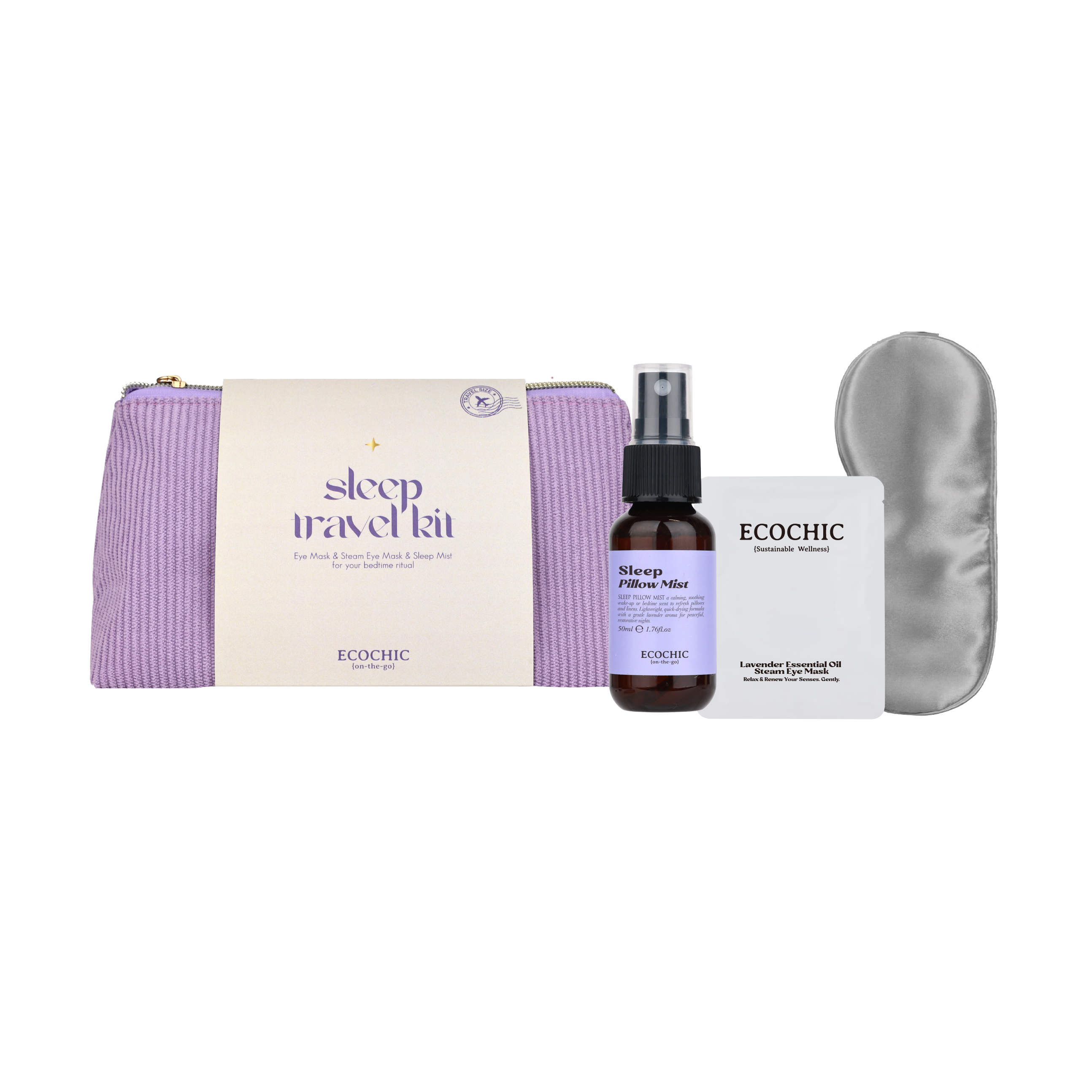
A short-haul (under 4 hours) travel essentials kit focuses on refreshment: cleansing wipe, lip balm, breath freshener, hand sanitizer. A long-haul (over 6 hours) adds sleep support and hydration: eye mask, earplugs, compression socks, toothbrush with toothpaste, facial moisturizer, and a larger bag doubling as an in-seat organizer. A multi-day kit — cruise passengers, tour groups — adds shower amenities, laundry bag, sewing kit, and a bag large enough as the trip's toiletry case. Kit composition should match journey duration: a short-haul kit overloaded with sleep accessories feels wasteful; a long-haul kit missing a toothbrush feels negligent.
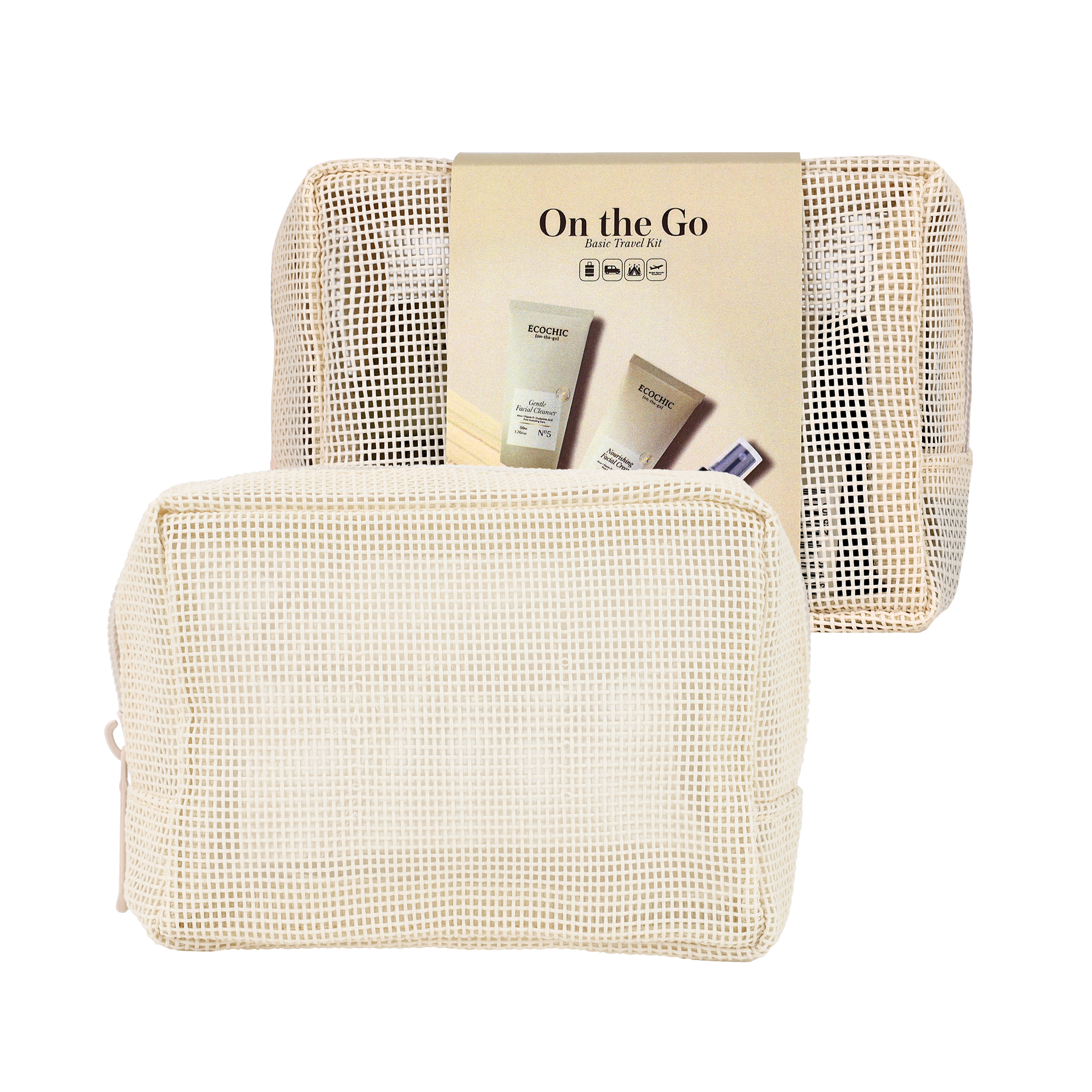
The packaging of a travel essentials kit is the first physical brand interaction. Recycled polyester canvas signals environmental awareness; organic cotton signals natural luxury; clear PVC signals budget economy; molded EVA signals durability. Closure type — zipper, drawstring, snap button — determines reuse: a zippered canvas bag becomes an ongoing toiletry case extending brand visibility for months. Logo application method — embroidery, screen printing, hot stamping — must be compatible with the material. An embroidered logo on canvas outlasts a screen-printed logo on polyester by years.
A beautifully assembled travel essentials kit sample means nothing if the supplier cannot deliver 10,000 identical units on time with compliant documentation. Evaluate four capabilities beyond the sample. Minimum order quantity — custom-composed kits typically start at 300 to 1,000 units, though some manufacturers offer smaller pilot runs. Lead time — 4 to 8 weeks from artwork approval for standard configurations; fully custom product development adds 3 to 4 weeks. Regulatory compliance — kits containing cosmetics must meet the destination market's regulations (EU Cosmetics Regulation, US FDA guidelines) for ingredient labeling, safety assessment, and packaging claims. Sustainability documentation — corporate procurement increasingly mandates material composition certificates, recycled content percentages, and carbon-footprint data for the kit and its components.
A travel essentials kit should contain items matched to travel duration: short-haul needs refreshment items; long-haul adds sleep and hydration accessories. Soho International provides product curation guidance based on the intended use scenario and recipient profile.
Recycled polyester canvas with a structured zip closure is the strongest choice for a premium travel essentials kit — it communicates sustainability, survives repeated use, and supports durable embroidery or hot-stamp branding.
A travel essentials kit containing cosmetics must meet the destination market's regulations for ingredient labeling, safety assessment, and packaging compliance. EU and US requirements differ.
Custom-composed travel essentials kit orders start at 300 to 1,000 units. Higher volumes reduce per-unit cost. Soho International offers flexible B2B production volumes.
A travel essentials kit production cycle takes 4 to 8 weeks from artwork approval. Fully custom product development adds 3 to 4 weeks. International shipping adds approximately 2 weeks.
Yes. A travel essentials kit can use recycled polyester, organic cotton, kraft paper, or biodegradable materials for bags and packaging. Sustainability certifications should be verified with the supplier.

Jiangsu Soho International Group Yangzhou Co., Ltd is a trusted manufacturer of personal care essentials, curated kits, and daily-use care solutions.
21/F, Building B, Mall of Colorful World, No. 8 Jinghuacheng Road, Hanjiang District, Yangzhou City, Jiangsu, China
Copyright © Jiangsu Soho International Group Yangzhou Co., Ltd. Privacy Policy
 EN
EN
 Hot News